North Cambridge Academy Case Study
Bringing Adaptive Teaching to Life
How North Cambridge Academy Built a Coaching Culture That Holds Both Autonomy and Accountability


Key Takeaways
- Facing an Ofsted-confirmed focus on adaptive teaching, North Cambridge Academy built a whole-school coaching model that gives teachers genuine autonomy over how they develop, while holding clear, shared expectations for what good teaching looks like.
- Lesson observations were replaced with peer coaching buddies who act as both coach and coachee, removing hierarchy and building the trust needed for honest, developmental conversations.
- A bespoke IRIS Connect Pathway brings the school’s own coaching cycle, guides, and trust WalkThrus into one place, so the model is consistent for every member of staff without becoming a straitjacket.
- After 18 months with adaptive teaching as the focus, department learning walks show a clear increase in effective adaptive teaching, and 94% of staff find the experience enjoyable with 97% finding it useful.
- The approach has spread well beyond teaching, with support staff, pastoral teams, and senior leaders now recording and reflecting on their own practice.
experience useful
across the school
Jump straight to the section that interests you most:
A School Built for Complexity
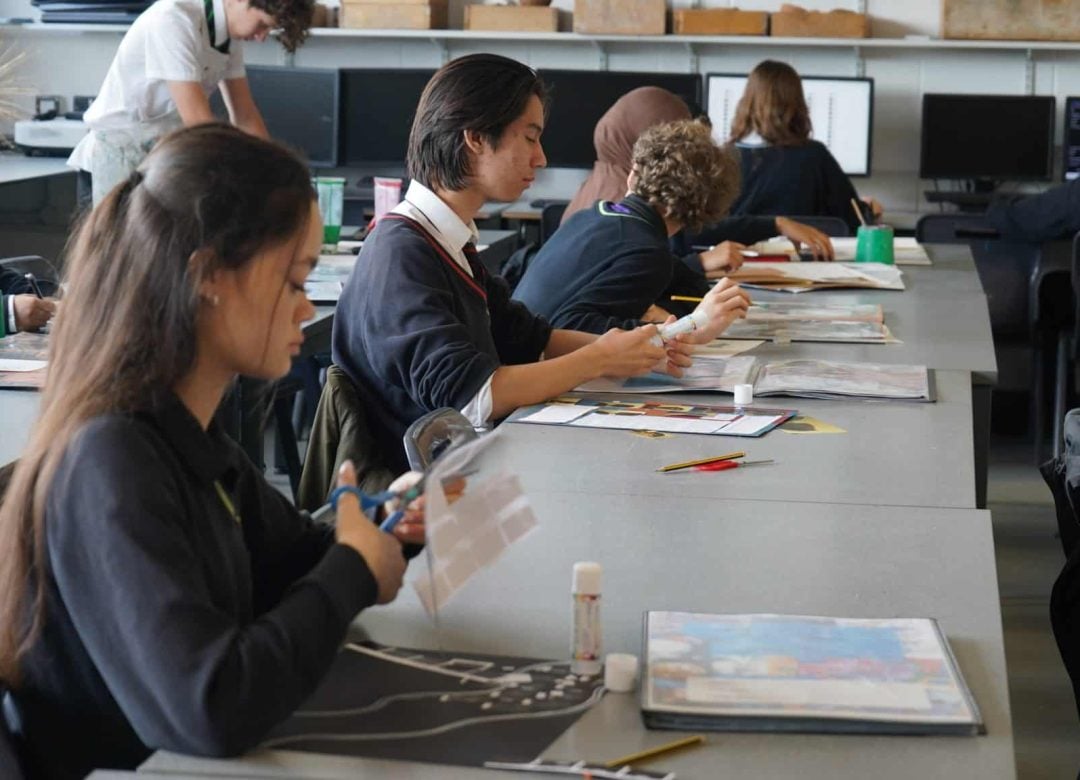
North Cambridge Academy is an 11 to 16 mainstream school serving a richly diverse community as part of the Meridian Trust. More than half of its pupils are eligible for pupil premium, around a quarter are on the SEND register, and roughly a third speak English as an additional language. As Principal Jane Driver puts it, the school caters for a wide range not just of abilities but of ethnicities and additional needs, with an unwavering aim: high-quality education at the heart of the local community.
premium
“You can’t and shouldn’t change the community that you serve. What you’ve got to change is how you provide for that community.”
— Jane Driver – Principal at NCA
That belief shaped a strong curriculum intent. But as Jane is quick to point out, the strongest curriculum intent is useless if implementation in the classroom does not match it. Making the right in-the-moment adaptations for complex learners, the work of adaptive teaching, became the school’s central professional development challenge. This is the story of how North Cambridge Academy brought adaptive teaching to life through coaching and IRIS Connect.
The Problem: CPD That Was Endured, Not Enjoyed
When SJ Eastwood, Assistant Principal for teaching and learning, early careers, and CPD, arrived at North Cambridge Academy nearly four years ago, she inherited a professional development model that left both her and the staff frustrated. It was top-down, reactive, and scattergun, leaving teachers to develop themselves with little direction or accountability.
SJ saw the same pattern leaders warn teachers against: trying to fill the vessel with knowledge rather than growing skills and motivation. Working with her professional tutor and IRIS Connect lead, she set out to build two distinct but connected paths. One side would hold standards and accountability through book looks, learning walks, staff and student voice, and results. The other would develop colleagues in their own areas of interest, motivated by coaching, the school’s early careers programme, and trust resources such as the Meridian Learning platform.

One of the first things to go was the traditional lesson observation. SJ and her team considered it an antiquated method of quality assurance: stressful, unpredictable, and a poor snapshot of a teacher’s true ability. Above all, it failed to put the teacher in the driving seat of their own development. The school needed something better to replace it.
“We were trying to move away from the kind of intense pressure that teachers find in that one observation that’s linked to their performance development.”
— Louise Vacca – Professional Tutor/ IRIS Co-Lead at NCA
A Clear Focus: Adaptive Teaching
Several things converged to sharpen the school’s thinking. A thriving early careers programme, led by professional tutor Louise Vacca, was already using IRIS Connect to instil deep reflection in the 10 to 17 trainees and early career teachers the school takes on each year. Many had accelerated so quickly that they now hold middle leadership positions only a few years into their careers. At the same time, work with curriculum leaders to define what each subject looks like at North Cambridge Academy had shown that staff had a real hunger for autonomy when given clear parameters to grow within.
Then came a successful Ofsted visit in February 2025. It cemented one priority that the Meridian Trust also wanted its schools to pursue: adaptive teaching. For the first time, the school had a single, clear trajectory for whole-school development that applied to every member of staff, whether teaching, pastoral, or support. Alongside this, SJ completed a three-part coaching course delivered by John Kane of Kanevolve, which crystallised how a coaching strategy could carry that focus into every classroom.
Building a Coaching Model That Balances Autonomy and Accountability
The model was anchored in a single idea, drawn from Sir John Whitmore’s Coaching for Performance: coaching is unlocking people’s potential to maximise their own performance. SJ and Louise wanted staff to feel genuinely in the driving seat of their own development. Rather than appointing a small set of coaches to work with everyone, the school made a deliberate choice: every member of staff would be paired with a coaching buddy, acting as both coach and coachee. Following John Kane’s guidance, buddies were chosen carefully to remove hierarchy, allow for vulnerability, and ensure no one felt judged. A mantra ran through everything.
— SJ Eastwood – Assistant Principal (T&L), IRIS Co-Lead at NCA
Coaching now runs through the school in three connected ways. It is embedded in the early careers programme, where trainees and early career teachers record themselves weekly or fortnightly and use the footage in coaching sessions with their mentors. It runs through whole-school lesson coaching cycles built on a pre-coach, record, post-coach, and reflect process, with two or three directed cycles a year and many staff now running their own on top. And it is reinforced through half-termly coaching and practice twilights with John Kane, using the GROW coaching model that John trained staff in throughout the year.

To give teachers a concrete focus, the school drew on 15 trust-created WalkThrus strategies, delivered as videos and resources the staff call IOLS (Independent Online Learning Sessions), covering techniques such as chunking, live modelling, and dual coding. Teachers choose which strategy is right for them and their classroom, while the school sets the basic parameters that allow it to hold accountability. As Louise Vacca explains, this is what makes the focus on adaptive teaching feel empowering rather than imposed.
“Teachers can choose what aspects of adaptive teaching they would like to work on, selecting those that will actually be beneficial to them, their students, and their subjects.”
— Louise Vacca, Professional Tutor/ IRIS Co-Lead at NCA
The Platform That Holds It Together
What turns this philosophy into a workable system is IRIS Connect.
The school built a bespoke Pathway with the IRIS Connect team that mirrors exactly the coaching culture they wanted, with the flexibility to adapt it over time. The 22 kits are spread across the school, one per early career teacher and trainee, one per department, and two for the teaching and learning team, so no one struggles to get hold of one. The school has committed to the platform with a three-year subscription for unlimited users.
“We built it specifically so that it gave a framework for accountability, but it didn’t stifle autonomy in its approach. It’s not putting a straitjacket around people.”
— SJ Eastwood – Assistant Principal (T&L), IRIS Co-Lead at NCA

“Teachers don’t have to remember four or five different logins. They’ve got that one platform where everything can be accessed.”
— Louise Vacca, Professional Tutor/ IRIS Co-Lead at NCA
For Jade Turner, Assistant Curriculum Lead of Science, the Pathway gives structure to the whole process. She knows what the next step is, both as coach and coachee, and can return easily to rewatch an IOLS before recording a lesson, reminding herself of the strategies and the conversation she had at the start.
Adaptive Teaching in the Classroom
The clearest measure of the model is what it has changed in lessons. Because coaching narrows in on a single, specific aspect of practice rather than a whole lesson, teachers report faster, deeper progress on the adaptive teaching strategies that matter most for their pupils.
Steph Anderson, Teacher of Maths and Assistant Maths Curriculum Lead, coaches a Teach First trainee and has seen recording transform how quickly they reflect and improve. Working on a precise technique such as 100% insistence, then practising, scripting, and recording it, has accelerated progress in a way that whole-lesson observation never did.

In humanities, Ben White, who trained at the school through Teach First, used his coaching cycle to develop checking for understanding through mini-whiteboards, an adaptive teaching strategy he had previously been reluctant to use. It has become a genuinely effective tool for gauging whether his mixed groups have understood, and he is candid that he would not have worked on it so deliberately without the coaching programme.
“Here’s eight strategies. Choose one, work on it really well, see how you do with it. There was no pressure. It’s developed a whole new strategy for me in terms of checking for understanding.”
— Ben White – Teacher of History, current ECT at NCA
Megan Jones, Teacher of Art and Photography and Assistant Curriculum Lead for the Visual and Performing Arts, used the whole-school focus to dig deeper into live modelling and metacognitive thinking. Watching herself back also revealed smaller adaptive habits, such as realising she tended to face one side of the room more than the other, that she could quickly correct to make her teaching more accessible.
“IRIS Connect hasn’t been about reinventing the wheel in my teaching practice. It’s been about making small improvements and small changes to become a better teacher.”
— Megan Jones – Assistant Curriculum Lead (Arts), Former ECT at NCA
For Jade Turner, a focus on modelling during her first round of coaching was so successful with students that it is now central to how she teaches certain concepts. And in English, Head of Department Lydia Small has used the platform’s sharing function to make her team genuinely collaborative, with colleagues choosing different WalkThrus around questioning and engagement and sharing what works across their different groups and sets.
“We’ve all sort of picked different WalkThrus, looked at the catalogue available within adaptive teaching, and then shared that with one another and used it all together to improve as a whole.”
— Lydia Small – Curriculum Lead (English), Former ECT at NCA
Marie Dijoux, Head of Languages, values how evidence-led the approach is. Reviewing video lets her and her team develop at their own pace and notice things a single drop-in would miss, surfacing adaptive priorities such as questioning and how teachers move around the room to check pupils’ work, which she would not otherwise have spotted so quickly.
“It’s more developmental. It’s less based on performance. It’s more led on how people develop at their own pace.”
— Marie Dijoux, Curriculum Lead (MFL)

From Reluctance to Whole-School Buy-In
Not everyone was convinced at the start. Putting a camera in a classroom asks staff to be vulnerable, and several were nervous or sceptical. Megan Jones admits she was initially reserved, even negative.
“My attitude towards it has really, really done a 180 since it’s been rolled out across the whole school and we’ve all been in it together.”
— Megan Jones – Assistant Curriculum Lead (Arts), Former ECT at NCA
Three things turned hesitation into momentum.
First, the school worked relentlessly to remove fear and barriers, creating IRIS Champions who showed colleagues how to use the equipment so they never had to feel exposed asking senior leaders.
Second, leaders jumped in first: Louise showed clips of her own teaching to early career teachers, SJ shared her own learning before launching the whole-school programme, and SJ and John Kane even demonstrated a live 20-minute coaching session in front of all staff.
Third, communication was constant and clear, with every member of staff rating it good or outstanding in feedback.
The result is a culture where staff feel safe to show what has not worked, because that is where the learning happens. Jade Turner captures the shift better than any metric.
“I now feel comfortable to show someone a lesson where I really struggled, because then you can lead on from it and have that positive growth conversation.”
— Jade Turner – Assistant Curriculum Lead (Science), Former ITT & ECT at NCA

“What you’ve got to do is ensure that the staff understand you’re doing something with them, you’re not doing something to them.”
— Jane Driver – Principal at NCA
A Snowball Effect Beyond the Classroom
After six or seven months, SJ noticed what she calls a snowball effect: the model began to spread without being directed. Teachers record their best practice and share it with colleagues, senior leaders model expectations for behaviour and movement around the room, and whole-school leads for literacy and numeracy share best practice in training. Crucially, the work reaches staff for whom professional development is rarely designed.
Toni Miller, Senior Tutor for Hawking House, had never given an assembly before taking on her role. Using IRIS Connect to record and review her assemblies has given her a way to develop skills she simply did not have when she started, at her own pace.
“It’s definitely given me confidence in my role. It’s not as scary as you think it’s going to be. The coaching that I’ve received has been paramount.”
— Toni Miller – Senior Tutor (Support Staff)

The Results So Far
One year on from introducing the whole-staff lesson coaching programme, the impact is visible in both data and culture. Anonymous staff feedback describes the process as rich, helpful, clear, purposeful, and non-judgemental, with 94% of staff finding the experience enjoyable and 97% finding it useful. Most importantly for the school’s central goal, department-based learning walks show a clear increase in teachers using adaptive teaching effectively, and in their ability to recognise, discuss, and implement adaptive strategies in lessons, meetings, and conversations.
“There’s now a perceptible buzz in the school culture around teacher development we didn’t have before.”
— SJ Eastwood – Assistant Principal (T&L), IRIS Co-Lead at NCA
Principal Jane Driver sees the impact reaching pupils directly. At her fortnightly celebration breakfasts, the first thing students now cite as their favourite thing about the school is the support and quality of provision from their teachers, and how hard those teachers work to support their progress. For Jane, the combination of IRIS Connect and coaching has given staff the confidence to make the right adaptations for pupils with very different needs, and has built a reflective, curious, and courageous culture across the whole school.
“What we’ve seen is the confidence of the staff in how to make those adaptations, and that in itself is supporting students’ attainment and progress in lessons.”
— Jane Driver – Principal at NCA
Advice for Other Schools
North Cambridge Academy’s leaders are clear that the technology was never the starting point; the vision was. Their advice to other schools is consistent: start with a motivated group of people, dedicate regular time to the journey, think carefully about who you pair together, work hard to remove fear, secure visible senior leadership support, and keep communication clear and constant. Above all, be brave enough to go first.
— SJ Eastwood – Assistant Principal (T&L), IRIS Co-Lead at NCA
Could This Work in Your School?
North Cambridge Academy’s story shows what becomes possible when a school takes a clear teaching and learning priority, in this case adaptive teaching, and builds a coaching culture and a bespoke IRIS Connect Pathway around it. The result is a model that holds autonomy and accountability together, and a staff body that is genuinely excited about developing its practice.
That impact has not gone unnoticed beyond the school’s own walls. Other schools across the Meridian Trust have visited North Cambridge Academy to see the coaching model and IRIS Connect in action, and several have since taken on the platform or are seriously considering it.
For Louise Vacca, who helped shape the programme from the very beginning, the proof is simply in how far her colleagues have come.
— Louise Vacca, Professional Tutor/ IRIS Co-Lead at NCA
To explore how IRIS Connect could support adaptive teaching and coaching in your school