
No Longer Just a Video Tool -
How IRIS Connect Has Evolved
- Last updated on: 19th October, 2026
- Andy Newell
When we sat down in a meeting room in 2010 and started sketching out what the ideal professional learning space might look like, we had a clear picture of where we wanted to get to. It’s taken us the best part of 18 years, but this is the first time I can say, hand on heart, that we’re nearly there: all of the platform’s capabilities have come together into one process that supports teachers’ professional development from start to finish.
Video is where we started, and it’s still what most people picture when they think of IRIS Connect. So I want to wind the clock back, explain the problem we set out to solve, and show how each piece has been added since. If video is the only part of the platform you know, this should give you a clearer picture of the rest.
The Problem We Set Out to Solve
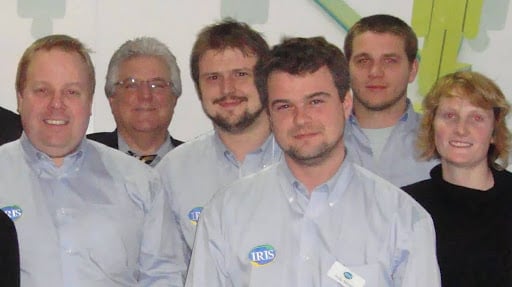
Before IRIS Connect, I spent a lot of time delivering training to schools on behalf of the University of Sussex. I’d go out, do what I considered a good job, follow all the best practice of the day, and then go back some time later to find that not very much had changed. Teachers were still using the same approaches as before.
When I raised this at the university, the answer was that it’s a very common problem. Most professional development, 18 years ago, wasn’t shifting the dial in classroom practice. And it wasn’t for lack of knowing what works. Practice-based, iterative learning that involves modelling, theory, observation, feedback, and coaching cycles was already well established. The difficulty was applying it. Sitting in the middle of all of those great learning interactions was one sticky, unscalable thing: lesson observation. For one teacher to share their practice with another meant rearranging timetables or physically moving people around the school, the trust, or the country.
That’s what we set out to change.
Video: Seeing Practice as It Was

We enabled video to be used for coaching, but also for teachers to watch their own lessons back and understand for themselves what was going on in their classrooms. That solved the logistics problem, and it did something else we hadn’t fully anticipated: the quality of professional conversations improved dramatically. Coach and teacher could time travel together back to the moment where something didn’t land as expected or a transition was difficult, and talk about why.
The platform was built on one principle from the start, and it still holds: if I record my lesson, the only person who sees it is me, until I choose to share it.
But it wasn’t enough.
Content: Something to Reach For

Reflecting on practice is a process, not an event. It needs a direction of travel and an evidence-based route to get there. So the next step was to bring professional learning content onto the platform, so that when a teacher saw something in their practice they wanted to work on, they had a resource to go to.
That wasn’t enough either, because the content wasn’t arriving at the right moment in the learning process. Having a library is one thing. Being handed the right page at the point you need it is another.
Pathways: The Right Tools at the Right Time

What we learned teachers really needed is something that guides them through a cycle of self-reflection, offering the right guidance and tools at each step, or that takes them through a cycle of coaching with a colleague and serves up each job in that cycle to the right person at the right time.
That’s what Pathways do. They walk people step by step through evidence-informed processes, which gives consistency and quality at scale and makes the whole thing more sustainable. You can leave and come back days later and pick up precisely where you left off.
AI: Breaking Out of Your Own Blinkers

Providing a structure for self-reflection matters, but reflection is still hard. When you watch your own practice back, you’ll only ever notice the things you already value. Everything else is invisible, because you’re not looking for it. Sometimes we need help to break out of that and look at aspects of practice we hadn’t considered.
There’s a practical problem too. Video observation saves the time-shifting, but you still have to watch a long lesson to find the key moments. Our AI tools take teachers directly to the moments that matter, which means the time saved can go into the things that need a person: high-quality dialogue, and building really good goals and plans.
Objectives: Goals That Live Beyond the Pathway

This brings us to the most recent step. Once a teacher has reflected on their practice and identified what they want to work on, that goal needs to exist as something in its own right. Something that lives outside the Pathway that created it, that can be evidenced over time, and whose progress can be tracked, by the teacher and by the people supporting them.
That’s what Objectives add, and it’s the piece that turns a sequence of good conversations into visible progress.
And All of It Is Yours to Adapt

Like most professional learning providers, we like to think our content and tools are best of breed. They’re very good but they’re not yours. What we’ve seen, consistently, is that schools use the platform far better when the Pathways, the content, the AI Insights and the goals are mapped to their own priorities rather than ours. So everything described above comes with strong templates, and every one of them can be adapted, refined, or replaced to match your school’s goals.
The Big Picture

- Video, so teachers can see practice as it really was.
- Content, so there’s always something to reach for.
- Pathways, to take you through the process of reflecting on practice and finding an area to work on.
- AI, to guide you along the way and save the time that should be spent on dialogue.
- The ability to set meaningful, trackable goals.
- And all of it adaptable to an individual school’s needs.
We’re not finished, and we never will be. But if you’ve only ever thought of IRIS Connect as a video tool, we’d like to show you what the rest looks like in practice. I’d be happy to take the time to walk you through it, simply click here to book a meeting.
About the Author
Andy is the founder of IRIS Connect and a regular speaker at professional learning events. He is passionate about bridging the gap between what the research shows about effective professional development and the practical delivery of impactful learning interactions. His journey began at the University of Sussex with groundbreaking work on the use of video in initial teacher training and culminated in the development of a web based platform to enhance teachers’ reflection and collaboration. Since founding the company Andy has worked around the world supporting effective teacher development, and has been involved in many inspiring educational projects and research.

Get blog notifications
Keep up to date with our latest professional learning blogs.
By clicking Subscribe you consent to us contacting you regarding our products and services, as well as other content that may be of interest to you. You also consent to us storing your personal data to provide you with the content you are requesting. You can unsubscribe at any time. To find out more about how we manage your data, please review our Privacy Policy.